

Let me be upfront about something: property stylists are good at their jobs. A well-styled property in Surry Hills or Darlinghurst can genuinely return five to ten times the cost of styling in additional sale price, and in a market where a 5% uplift on a $2 million terrace is $100,000, that maths makes sense.
But there are a few things that don’t always make it into the initial conversation. Things I’ve noticed working alongside agents and vendors at Murray Property that are worth knowing before you sign a styling brief or hand over a deposit.
Here are five of them.
Decluttering will do more than the furniture
Every stylist will show up with beautiful furniture, linen and accessories. What they often don’t say loudly enough is that the single most impactful thing you can do before they arrive is remove half of everything you own.
Surry Hills terraces and Darlinghurst apartments are compact by nature. The narrow hallways, the small living areas, the galley kitchens, all of it reads as bigger when there is less stuff in it. A Surry Hills terrace with 40% less furniture looks spacious in photographs. The same terrace full of your actual belongings looks cluttered, even after styling.
The practical version of this: hire a storage unit for the campaign. Put in everything that isn’t essential. Do it before the stylist arrives, not after. The difference in photography is significant and it costs nothing beyond the storage fee, typically $150–$300 per month for a medium unit in inner Sydney.
The bathroom matters more than the kitchen
Kitchen renovations get all the press. Everyone talks about whether to update the kitchen before selling. The honest answer in most cases is no, a full kitchen renovation in a Surry Hills terrace rarely returns its cost in the sale price, and buyers in this market are often planning to renovate to their own taste anyway.
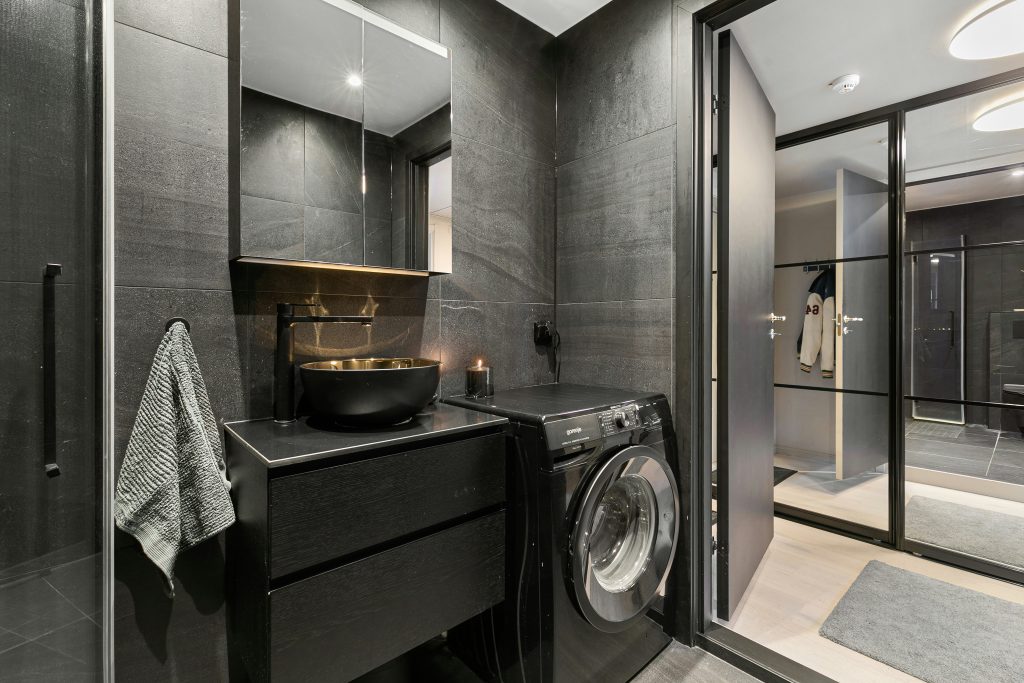
The bathroom is a different story. Buyers make emotional decisions in bathrooms in a way they don’t in kitchens. A clean, fresh, well-lit bathroom feels premium even if it isn’t. A tired bathroom, yellowing grout, old tapware, a dated vanity, gives buyers a specific number to negotiate with: “We’ll need to do the bathroom, so we’re knocking $30,000 off.”
You don’t need a full renovation. Interior painting can raise the final sale price by up to 5%, and the same principle applies to targeted cosmetic work in a bathroom. New tapware ($300–$600), a re-grout ($200–$400), a new mirror ($100–$300), and a professional clean ($150–$200) can transform the feel of a bathroom for under $1,500. That is almost always a better investment than a kitchen update.
Styling costs in Sydney are negotiable, and the packages vary significantly
Property styling costs in Sydney in 2026 range from around $2,500 for a small apartment to $15,000 or more for a large prestige home. Most Sydney vendors spend between $4,000 and $8,000 on professional property styling.
What is not always made clear upfront is what is and isn’t included in those figures. Some stylists include furniture removal and delivery in the package. Others charge separately. Some include the photography consultation, walking through the property with the photographer to ensure every room is shot at its best angle, and others don’t. Some packages cover four weeks and then charge a weekly extension fee if the property doesn’t sell.
Before you sign anything, ask:
- Is furniture delivery and removal included?
- What is the weekly extension rate if the property is still on market at four weeks?
- Do you attend the photography session?
- What happens if something gets damaged?
Most stylists offer packages for four to six weeks because this aligns with the average selling period in Sydney, currently between 29 and 36 days according to Cotality’s 2026 market update. That’s the right timeframe for Surry Hills and Darlinghurst houses, which are selling in 26–39 days on average. For units, which can take 35–45 days, a six-week package is worth the conversation.
The thing your stylist might not say: the base price isn’t always the full price. Ask about everything before you sign
Photography is where the styling actually pays off
Buyers in 2026 form their first impression of a property online, often days or weeks before they attend an open home. High-quality styling significantly boosts click-through rates on listing portals. Your real estate photography becomes a digital sanctuary, ensuring your property is the one they can’t stop thinking about before they even step inside.
The return on styling is not really about how the property looks at the open home. It is about how it photographs. A well-styled Surry Hills terrace with good natural light and a professional photographer produces images that stop a buyer scrolling on realestate.com.au. An unstyled or poorly photographed property, even if it’s objectively a better home, gets fewer click-throughs, fewer open home attendees, and a smaller buyer pool at auction.
This has two practical implications. First, the styling and the photography need to be coordinated, the stylist should either attend the shoot or at minimum walk the space with the photographer’s angles in mind. Second, don’t economise on photography. In a market where your property is competing against Bresic Whitney and Belle Property listings with professional photography and video, a property shot on an iPhone is immediately at a disadvantage.
The thing your stylist might not say: the photos are the product. Everything else serves the photos.
You can overcapitalise on styling just as easily as on renovation
A styled house attracts more potential buyers and an increase in value up to 12 per cent. That is the upper end of the range and it applies to well-targeted styling in the right market. It does not apply universally, and there is a point at which styling spend stops generating return.
The general rule that agents apply: spend no more than 5% of your property’s current value on pre-sale improvements. On a $1 million Surry Hills apartment, that’s $50,000/.dwhich is an extreme upper limit nobody sensible would reach on styling alone. But the principle applies at every price point. A $15,000 styling package on a $700,000 studio is almost certainly overcapitalising. A $7,000 package on a $2 million terrace is probably about right.
The other overcapitalisation trap is styling rooms that buyers don’t respond to. In Surry Hills and Darlinghurst, buyers care intensely about the living area, the primary bedroom and the outdoor space. They care significantly less about secondary bedrooms, studies and laundries. A stylist who wants to stage every room in a compact terrace may be adding cost without adding value.
The thing your stylist might not say: not every room needs the full treatment. Prioritise the three spaces that buyers make decisions in.
Property styling works. The data is consistent and the logic is sound, professionally styled properties sell for 5–15% more than comparable unstyled properties in the same suburb, and most experienced Sydney agents apply a simple rule of thumb: expect to return a minimum of five to ten times the styling cost in additional sale price.
But it works best when it’s part of a well-considered pre-sale strategy, not a last-minute add-on, not a substitute for fixing the things that actually need fixing, and not an exercise in staging every room regardless of whether buyers will spend time in it.
If you are thinking about selling in Surry Hills or Darlinghurst and want an honest conversation about what preparation will and won’t move the needle for your specific property, that is exactly what we do at appraisal.
Book a free appraisal with Murray Property
Further reading
- How to sell your property in Surry Hills
- Selling process guide — Surry Hills
- Selling process guide — Darlinghurst
- What is my Surry Hills property worth in 2026?
- What is my Darlinghurst property worth in 2026?
Sources
- Styling Lab — How Much Does Property Styling Cost in Sydney in 2026?
- Which Real Estate Agent — Top Property Stylists in Sydney 2026
- CommBank — Maximise Your Property Value with These Styling Tips
- Western Sydney Trades — How to Add Value to Your Home Before Selling 2026
- Amazema Interiors — Sydney Apartment Renovation Sale Price 2026