
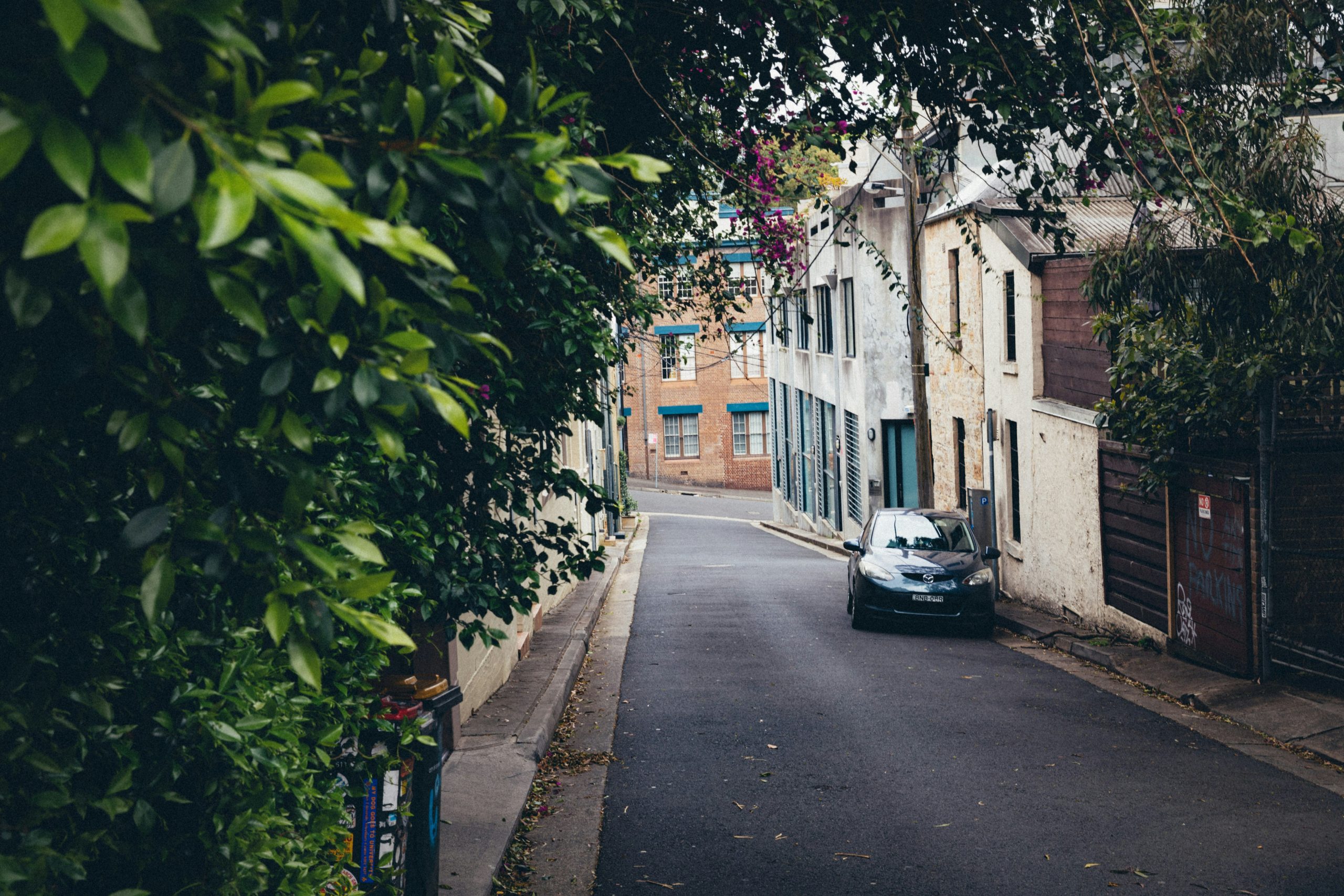
There are Sydney suburbs you move to because they’re affordable, or because the school catchment works, or because it’s what you could get. And then there’s Surry Hills, a place people choose very deliberately, and rarely leave.
Just 1.3 square kilometres tucked between the CBD and the inner east, Surry Hills manages to feel like a village while sitting at the centre of everything. It’s a suburb of heritage terraces and laneway bars, of world-class coffee and Sunday markets, of creative studios and quiet residential streets that feel nothing like the city they’re sitting in.
But it’s also one of Sydney’s most competitive property markets, if you’re buying or renting, and that means going in with open eyes. Here’s what you need to know before you make a move.
The Feel of the Suburb. What Makes Surry Hills Different
Surry Hills has gone through a few lives. It started as working-class and industrial, the rag trade, printing houses, small factories. From the 1980s onward it gentrified steadily, attracting artists, designers and hospitality workers who liked the character of the Victorian terraces and didn’t mind the hills. By 2026 it’s a fully-formed inner-city neighbourhood, expensive, yes, but with an authenticity that its wealthier postcode neighbours sometimes lack.
The atmosphere on a given week might include:
- The monthly Surry Hills Markets on the first Saturday, with local makers, food stalls and a crowd that genuinely represents the neighbourhood
- Crown Street filling up on a Friday evening, restaurant bookings stacked three deep, small bars spilling onto the pavement
- The Brett Whiteley Studio open for quiet mid-week visits, one of Sydney’s most intimate cultural spaces
- Belvoir St Theatre selling out a new season production, right next to a terrace house that last sold for $3.2 million
- Dog walkers at Shannon Reserve. Cyclists cutting through to the CBD. Couriers stacking up outside the food delivery dark kitchens on Foveaux Street
The median age here is 35. Average household size is 1.8 people. More than half of all residents rent. It’s a suburb that skews young-professional and creative, and feels it, in the best way.

What Buyers Need to Know
Buying in Surry Hills means buying into scarcity. The suburb covers just 1.3 square kilometres of predominantly heritage streetscape, and there is no meaningful pipeline of new supply coming. What’s here is mostly what’s always been here, and that structural constraint is one of the defining reasons prices have held firm even as broader Sydney has softened.
Current prices (mid-2026)
| Property type | Median price | Annual growth |
| House / terrace | ~$2.35M–$2.48M | ~8–12% (past 12 months) |
| Unit / apartment | ~$885K–$940K | Flat to modest growth |
| Renovated 3-bed terrace | $2.8M–$3.5M | Varies by street and finish |
The house market and the unit market are telling two very different stories right now. Houses, particularly well-presented heritage terraces, are moving in 26 to 29 days on average, the fastest pace recorded since mid-2022. Stock-on-market sits at just 0.22%, meaning for every property that comes up, there’s a deep pool of buyers with almost no alternatives.
Units are more nuanced. Prices have been broadly flat over the past year, days on market stretch to 35–45 days for some stock, and buyers in this segment are doing more due diligence before committing. If you’re buying a unit, realistic pricing and presentation still matter enormously.
What the money actually gets you
- Under $950K: Studios and one-bedders in older walk-up buildings, or entry-level unrenovated stock on less sought-after blocks
- ~$1.2M–$1.8M: Two-bedroom apartments in well-located buildings with good amenity, the core of the investor and first-buyer market
- $2.3M–$2.8M: Two or three-bedroom terraces, often requiring some work, the entry point to the heritage house market
- $2.8M and above: Renovated three-bedroom terraces on the better streets (Bourke, Fitzroy, Riley, Albion), warehouse conversions, and anything with off-street parking or a north-facing garden
Street matters enormously in Surry Hills. The same terrace configuration can vary by $400,000 to $600,000 depending on whether it’s on a quiet residential street or a busy arterial. If you’re working with a budget, knowing which pockets to focus on is half the work, and that’s where local expertise pays off.
What Renters Need to Know
Renting in Surry Hills is competitive. More than half the suburb’s residents rent, vacancy sits at approximately 0.78%, one of the tightest rates of any inner-city Sydney suburb, and well-priced properties regularly lease within one to two weeks of hitting the market.
Current rents (mid-2026)
| Property type | Median weekly rent | Gross yield |
| House / terrace | ~$1,150 per week | ~2.6% |
| Unit / apartment | ~$775–$800 per week | ~4.4% |
| Executive / premium stock | $1,100+ per week | Varies |
One-bedroom and two-bedroom units are the most in-demand rental configuration in the suburb, driven by the demographic of younger professionals and couples who make up most of the renter population. Properties in buildings with lifts, parking and updated common areas command stronger rents and shorter vacancy periods than older walk-up stock.
One-bedroom and two-bedroom units are the most in-demand rental configuration in the suburb, driven by the demographic of younger professionals and couples who make up most of the renter population. Properties in buildings with lifts, parking and updated common areas command stronger rents and shorter vacancy periods than older walk-up stock.
Tips for renters applying in Surry Hills
- Have your application pack ready to go before you inspect (100 points of ID, payslips, references, rental ledger. Properties move fast)
- Don’t low-ball. In a sub-1% vacancy market, offering below asking price on a well-presented rental won’t get you the property.
- Be flexible on move-in dates if you can, landlords often have overlapping tenancies and a flexible tenant is genuinely valued.
- Ask about parking separately. Off-street parking is rare and commands a premium, but some buildings have stacker systems or nearby arrangements worth asking about.
- Factor in strata levies and building quality when comparing, older walk-ups may be cheaper but come with limited common area amenity.
The Day-to-Day: What Life in Surry Hills Actually Looks Like
Ask anyone who lives here what they love most and you’ll hear the same things: the walkability, the food, the fact that you never have to get in a car if you don’t want to.
Coffee and food
Surry Hills has one of the densest concentrations of quality cafés and restaurants in the country. Single O, Reuben Hills, Artificer and Paramount Coffee Project (set inside the heritage-listed Paramount Pictures building) anchor a café scene that is taken very seriously by the people who live here. Locals don’t queue reluctantly, they consider it part of the Saturday ritual.
For dinner, Crown Street is the main artery, from Bills to Cicerone tucked in its Bourke Street courtyard, to Armorica’s French brasserie on the strip, but the side streets are where the real local haunts are. Foveaux, Elizabeth and the laneways running off them reward exploration.
Culture and community
The Brett Whiteley Studio on Raper Street is one of those rare cultural institutions that feels genuinely intimate, the artist’s former home and workspace preserved exactly as he left it. Belvoir St Theatre, sitting quietly among terrace houses on Surry Hills’ edge, is one of Australia’s most important independent theatre companies. The Surry Hills Markets run on the first Saturday of each month at Shannon Reserve, clothing, homewares, produce and local makers in a setting that feels more like a community gathering than a market.
Transport
You don’t need a car in Surry Hills and most residents don’t use one as their primary mode. Central Station is a 10-minute walk. The light rail runs through the suburb with stops at Surry Hills and Central. Multiple bus routes cover Crown Street, Taylor Square and Riley Street. The CBD is a comfortable 15-minute walk or a five-minute cycle.
Green space
Shannon Reserve is the suburb’s main green space, modest in size but well-loved, and functioning as the weekly gathering point for the community market. Moore Park, with the SCG and Entertainment Quarter, sits right on the eastern edge of the suburb and gives residents access to a much larger recreational precinct. Prince Alfred Park, to the north, is a short
The Best Streets in Surry Hills. A Quick Guide
Not all of Surry Hills is equal. Here’s a rough pocket guide:
- Bourke Street: One of the premier residential streets, wide, leafy, quiet away from the café strip end. Premium terrace pricing.
- Fitzroy Street: Highly regarded, particularly the northern end. Beautiful Victorian terraces, quiet character.
- Riley Street: Well-located, close to Crown Street amenity but sufficiently off the main drag. Popular with buyers who want the lifestyle without the noise.
- Albion Street: Central but residential in feel. Good access to transport and dining.
- Crown Street (south end): The main food and café strip, noisy and busy, but if lifestyle and walkability is your priority, the apartments and terraces here put everything on your doorstep.
- Foveaux and Elizabeth Streets: Quieter residential pockets, popular with renters who want the suburb at a slightly lower price point.
Is Surry Hills Right for You?
The honest answer is: it depends on what you’re optimising for.
Surry Hills is a great fit if:
- Walkability and lifestyle are priorities, you want to be able to walk to dinner, to coffee, to the city
- You value character over size, a two-bedroom terrace with a courtyard will always beat a new-build two-bedder for atmosphere
- You’re a buyer thinking long-term, the structural supply constraint in this suburb has historically underpinned values through market cycles
- You’re a renter who wants inner-city energy with a neighbourhood feel, few Sydney suburbs deliver both as well as this one
It may not be the right fit if:
- You need space above everything else, gardens are small and parking is limited
- You’re a yield-focused property investor, house yields at 2.6% won’t meet most income-focused thresholds
- You have school-age children. Surry Hills is well-served by primary schools but secondary options require some planning
- Budget is your primary constraint, this is one of inner Sydney’s more expensive postcodes, and the entry point reflects that
Contact us
Murray Property has been working in Surry Hills and Darlinghurst for over 20 years. We know which streets hold their value, which buildings to avoid, and what’s actually available before it hits the portals.
Get in touch with our team at murrayproperty.com.au/contact or call (02) 9371 5901 we’d love to help.